Aesthetic restorations built from clinical information
Shape, proportion, texture and colour are interpreted with the dentist, not guessed after production has started.
The laboratory needs more than a shade code
Facial references, calibrated photographs and substrate information help the laboratory understand the intended integration.
Aesthetic laboratory work starts with a readable clinical objective. Facial references, retracted photographs, preparation design, substrate information, shade references and the approved tooth position help ISDL understand how a restoration should integrate rather than merely appear bright or symmetrical.
The laboratory distinguishes the information supplied by the dentist from its own technical interpretation. If the records do not support the requested result, clarification takes place before ceramic production.
- Full-face and smile photographs
- Retracted frontal and lateral views
- Shade reference under controlled light
- Information about the substrate and preparation
- Wax-up, mock-up or approved design when applicable
Digital planning followed by deliberate finishing
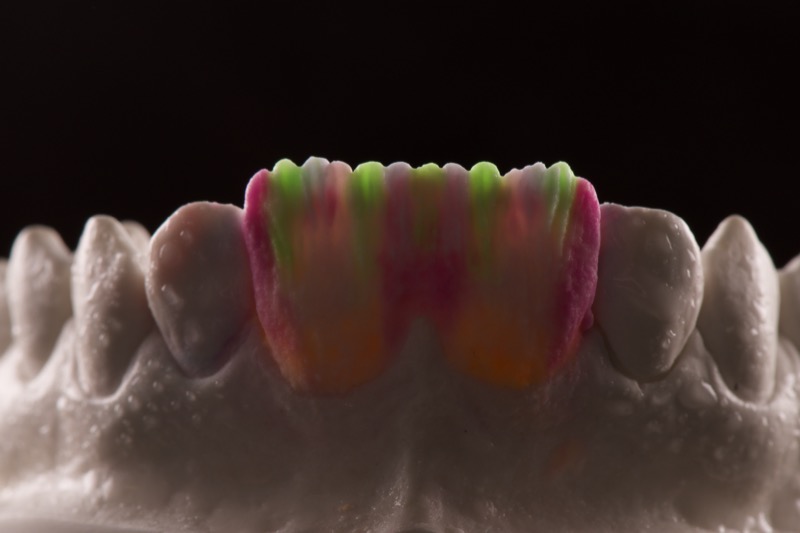
Digital tools support proportion and repeatability. Ceramic layering, line angles, microtexture and surface finishing are adjusted according to the clinical record and material selected.
Validation stages match the complexity of the case
For demanding anterior work, the dentist and laboratory agree in advance which stages require review. The objective is to make important decisions before they become expensive to change.
Document
Collect photographs, scans and prescription details.
Plan
Define morphology, material and validation stages.
Create
Produce and finish according to the approved project.
Control
Review surface, shade communication and final documentation.
Optical integration is planned from the substrate to the surface
A zirconia crown, layered zirconia restoration, ceramic veneer and anterior bridge each create different constraints. Space, preparation, substrate colour, framework opacity, incisal effects and the surrounding dentition influence the material and finishing strategy.
CAD supports proportion, contacts and repeatability. Ceramic layering and manual finishing are used to develop line angles, translucency, texture and characterisation from the documented project.
Anterior crowns
Morphology and optical integration guided by photographs and the prescribed material.
Ceramic veneers
Proportion, preparation, substrate and validation stages reviewed as one project.
Zirconia restorations
Framework and finishing choices aligned with the indication and aesthetic target.
Documented cases
Selected laboratory work presented with context rather than unsupported promises.
Photography and validation reduce distance between practice and laboratory
For practices working remotely, a consistent photography protocol and agreed validation stages are essential. ISDL reviews how records will be transferred, who validates the project and which practical conditions must be confirmed before the first case.
Every patient outcome depends on the treating dentist and the individual clinical situation. The laboratory provides prosthetic design and fabrication within that professional framework.
Zirconia, ceramic and veneer laboratory questions
Which records are needed for an aesthetic ceramic case?
The dentist should provide the prescription, scans or impressions, facial and retracted photographs, shade references, substrate information and any approved design reference.
Does a shade code replace clinical photography?
No. A shade code alone does not describe texture, value, translucency, facial context or neighbouring teeth.
Can ISDL review zirconia and ceramic cases from abroad?
Yes, after confirming file compatibility, photography, validation stages, timing and practical conditions.
Does ISDL promise an identical result for every case?
No. Laboratory work is case-specific and depends on the clinical records, prescription, material and decisions of the treating dentist.
Share an aesthetic case with ISDL
Describe the clinical objective and the records available.