Fixed dental prosthetics designed in their clinical context
Material, design and finishing are selected according to the indication, preparation, support and aesthetic objective.
A focused fixed prosthetic service
Each restoration is designed around available space, support, function and the prescribed material.
ISDL supports dental practices looking for a fixed dental prosthetics laboratory that treats the prescription, scan and clinical documentation as one record. Crowns and bridges are not designed from geometry alone: margin visibility, restorative space, antagonist, occlusion, substrate and the intended material all influence the laboratory response.
When information is incomplete or contradictory, the question is returned to the dentist before production. This keeps clinical decisions with the practitioner and prevents a digital file from becoming an unsupported assumption.
- Monolithic or layered zirconia crowns
- Ceramic and zirconia bridges
- Anterior aesthetic crowns
- Implant-supported fixed restorations
- Provisional or validation stages when agreed
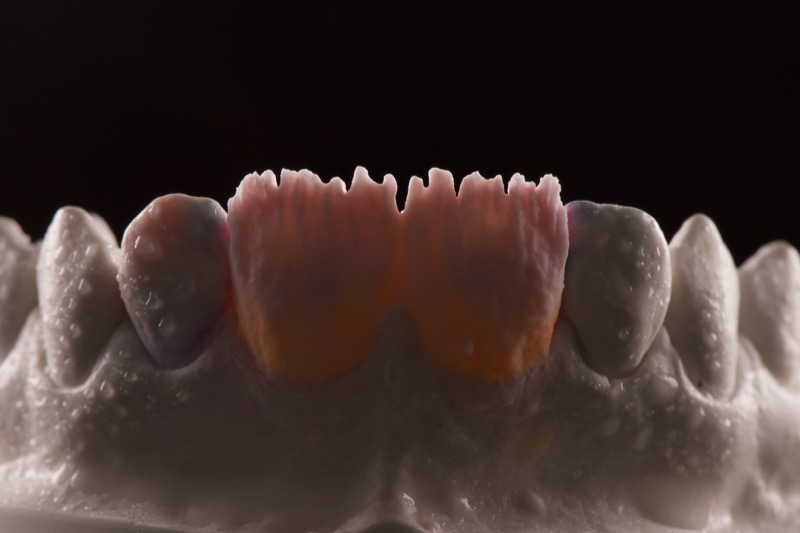
From preparation review to final control
Analyse
Preparation, limits, space and occlusion are reviewed.
Select
Material and design are aligned with the prescription.
Produce
CAD/CAM and manual stages follow the approved plan.
Verify
Fit, contacts, morphology and finishing are controlled.
Technical questions are addressed early
When the scan, preparation or requested restoration creates uncertainty, the laboratory contacts the dentist before advancing. This keeps responsibility for clinical choices with the practitioner and reduces late interpretation.
Material selection follows the indication and restorative objective
Monolithic zirconia, layered zirconia and ceramic restorations do not answer the same mechanical and aesthetic priorities. The sector, support, available thickness, span, occlusal environment, substrate and shade objective are reviewed with the prescription before a route is confirmed.
Digital design controls volumes, connectors and contacts. Manual finishing then addresses line angles, surface texture, colour transitions and the visual integration expected from the clinical records.
Zirconia crowns
Monolithic or layered solutions assessed according to the prescribed indication.
Ceramic bridges
Architecture, connectors, emergence and occlusion reviewed before production.
Implant-supported fixed work
Component information and prosthetic stages coordinated with the dentist.
Digital case intake
Scans and supporting records checked through the ISDL CAD/CAM workflow.
A first case begins with technical and practical compatibility
Dentists outside Algeria can present their scanner, export route and expected fixed restorations through the international collaboration form. ISDL confirms the documents, validation checkpoints, communication channel, timing and practical conditions before accepting production.
A limited first-case process is used to test the working relationship. No general turnaround or transport promise is made before the destination and workflow have been reviewed.
Fixed dental prosthetics for international practices
Which fixed dental restorations can be reviewed by ISDL?
ISDL reviews zirconia and ceramic crowns, bridges and implant-supported fixed restorations according to the prescription and available clinical records.
Does ISDL accept intraoral scans?
Yes, when the scanner, export route, bite data and supporting information are compatible with the agreed workflow.
Is zirconia suitable for every crown or bridge?
No. Material selection depends on the indication, support, space, span, occlusion and aesthetic objective. The clinical decision remains with the dentist.
Can a dentist outside Algeria submit a first case?
Yes. Start with a compatibility review covering the scanner, records, validation stages, timing and practical conditions.
Present a fixed prosthetic case
Share the indication, scanner and expected restorative workflow.